
A revolution is not merely a change of government. It is a violent, sudden alteration in the fundamental character of rule – a total break from the existing form, dispensation, and nature of power. It sweeps not just governments but social hierarchies, economic arrangements, and cultural values into the furnace of transformation. Revolutions do not merely elect new leaders; they dismantle the very architecture within which leaders operate.
The Revolutionary Equation
Anger + Hope → Protest → Anti-Incumbency → Regime Change
The Blueprint of 2014
To understand the present, one must study the template. Between 2011 and 2014, all conditions for a political revolution converged with rare precision. Citizens had accumulated deep, structural anger against the UPA government – not merely over policy failure, but over the perceived moral bankruptcy of the ruling dispensation. The mishandling of the 2008 economic depression’s aftermath, combined with a cascade of rampant corruption charges, had corroded public trust to its foundations.
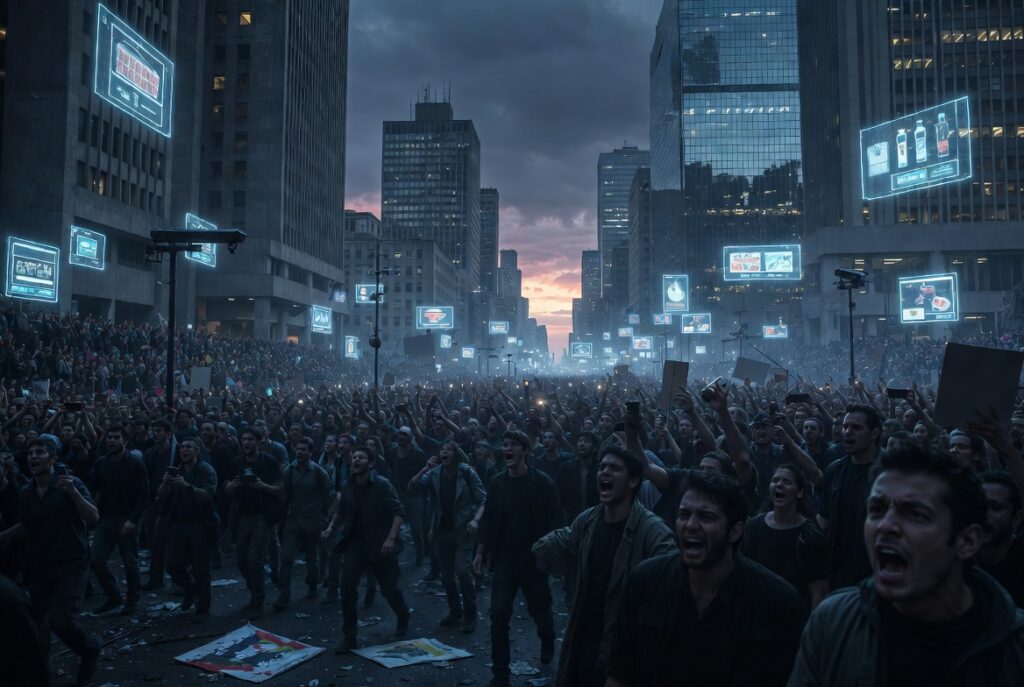
The catalyst was the Nira Radia tape recordings – those extraordinary leaked conversations that fused the worlds of corporate lobbying, political manipulation, and media complicity into a single, scandalous narrative. The tapes did not create the anger that already existed beneath the surface; they electrified it. They gave a face, a voice, and a name to the abstract grievance millions had nursed in silence.
“The tapes did not create the anger that existed beneath the surface. They gave a face, a voice, and a name to the grievance millions had nursed in silence.“
beyondtarun.com
But anger alone was insufficient. History is littered with furious populations who changed nothing. What made 2014 different was the simultaneous emergence of hope – credible, visible, and packaged in the form of the Gujarat Model. The sole BJP-led state of that era was demonstrably performing well across multiple economic and governance indicators. It gave the electorate something far more powerful than outrage: an imagination of the possible.
The result was mathematically inevitable. Anger plus hope produced protest. Protest crystallised into anti-incumbency. Anti-incumbency delivered the Congress party its most historic electoral collapse.
The Present Equation – One Variable Missing
Today, economic pressures bearing down on the government of the day are real and acknowledged. Unemployment anxieties, inflationary stress, and agrarian distress persist across significant swathes of the electorate. There is discontent. There is frustration. The first variable ANGER is present.
But the present dispensation has managed the crisis materially better than its predecessor. More importantly, the government has not handed the opposition the singular, damning narrative that the Radia tapes once provided – a clear, undeniable symbol of systemic rot that a majority could point to and say: this is what must be destroyed.
The Fractured Opposition and the Trust Deficit
The second variable HOPE is almost entirely absent. The alternatives available to the nation are themselves deeply compromised in the public imagination. They are perceived not as reformers waiting in the wings, but as familiar faces from the same political culture they claim to oppose: highly corrupt, ideologically incoherent, and managerially unfit for the demands of modern governance.
The nation has witnessed what may be termed the political ideological backstabbing of Arvind Kejriwal – a figure who arrived as the embodiment of anti-corruption hope, and who subsequently demonstrated that the politics of convenience is inescapable regardless of the banner under which one campaigns.
The nation no longer trusts the Ostrich Parties – those that bury their heads in ideological sand while the world demands practical governance and a coherent vision.
The “Ostrich Parties” – those that retreat into familiar grievances rather than articulating a coherent vision – have forfeited the trust required to serve as the second variable. They can generate noise; they cannot generate hope.
What This Means for Indian Democracy
This is not a triumphant analysis for any political actor. A democracy where anger exists but hope is absent is in a particularly dangerous holding pattern. The pressure does not dissipate; it accumulates. Populations do not become less frustrated simply because no credible alternative exists – they become more cynical, more volatile, and more susceptible to the appeal of authoritarian shortcuts that promise to cut through democratic paralysis entirely.
The burden falls disproportionately upon the opposition – not to perfect its communication strategy or social media presence, but to do the far harder work of rebuilding the architecture of trust. That requires ideological coherence, demonstrated administrative competence at the state level, and the courage to present a genuinely different vision of Indian statecraft.
Until that work is done, the revolutionary equation remains incomplete. India will have anger. India may even have protest. But protest without hope resolves not into transformation – but into exhaustion. And exhaustion, historically, is the ally of whoever already holds power.
Read More on Politics or Opinions


Leave a Reply