-
Alliances Are Not Friendships
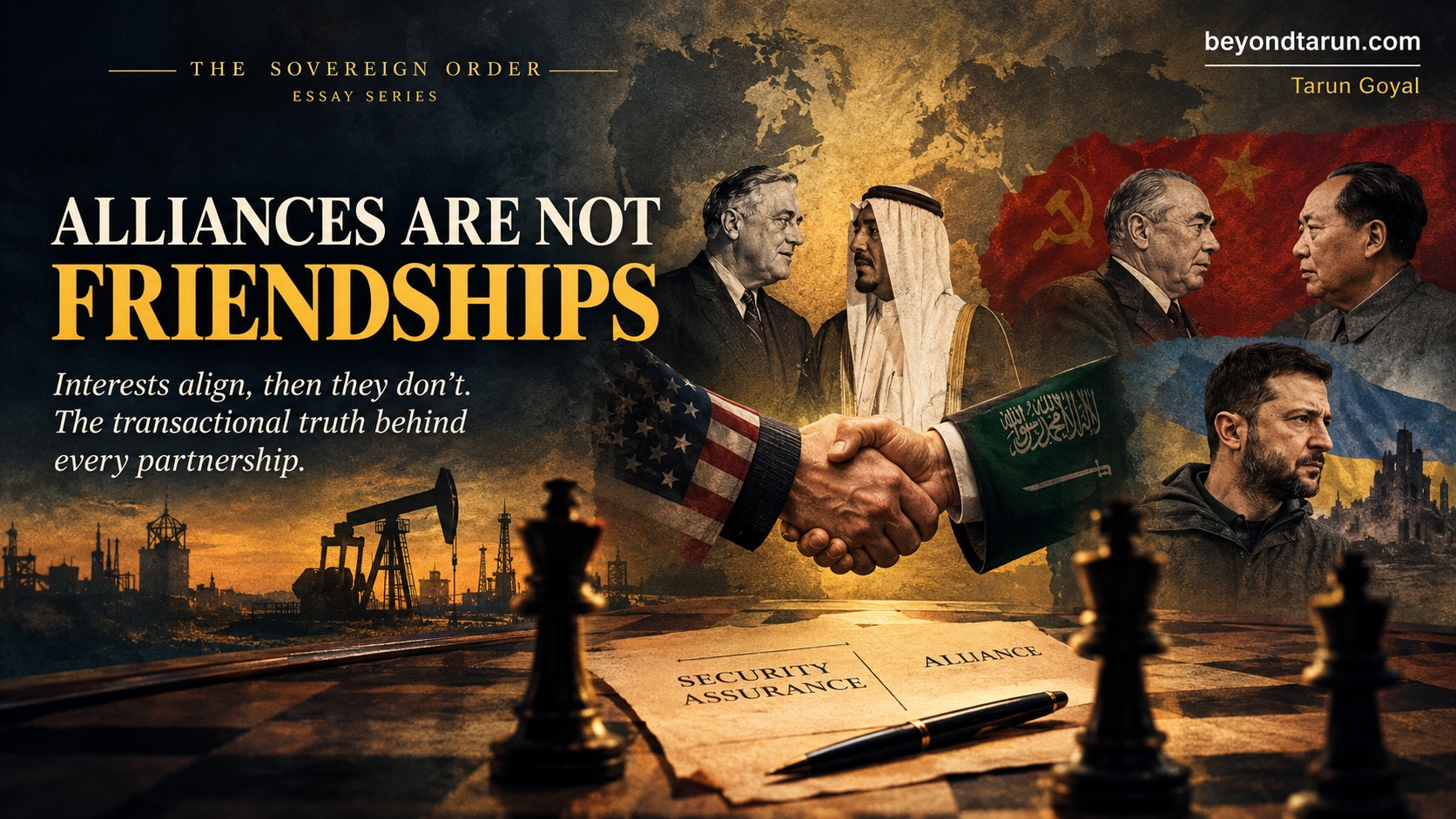
States do not have friends. They have interests, and for as long as two states’ interests point the same direction, they call the arrangement a partnership, an alliance, or a special relationship. The moment those interests diverge, so does the alliance, regardless of how many decades of shared history came before. From the Quincy Agreement…
-
Why Empires Don’t Collapse Overnight ?
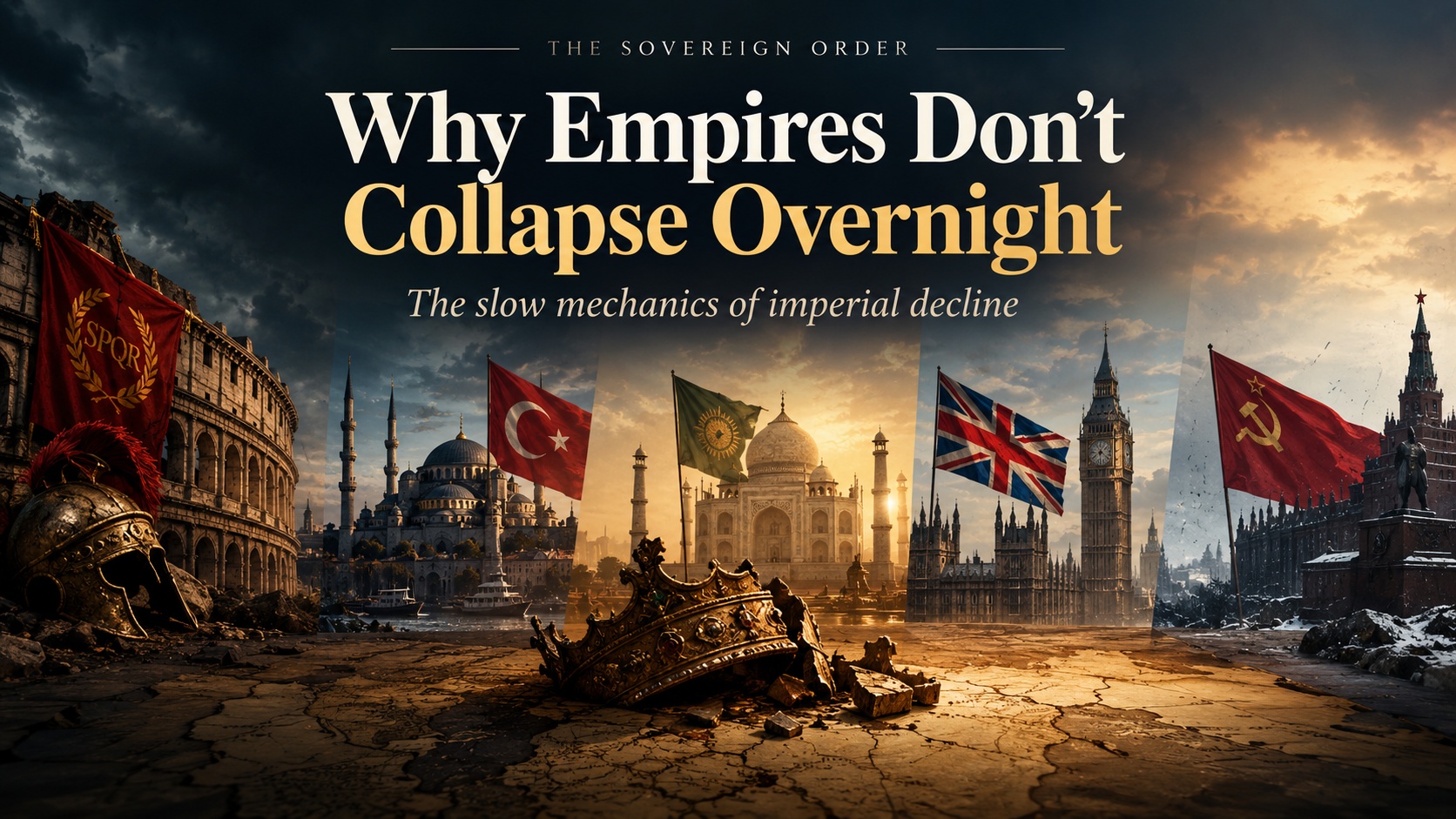
No empire has ever fallen in a single afternoon, however the history books compress it. Rome, the Ottomans, the Mughals, the British, and the Soviets each took decades, sometimes centuries, to unwind. The pattern beneath all five is the same: fiscal exhaustion, legitimacy erosion, elite defection, and military overstretch, working together long before anyone declares…
-
What Makes an Order “Sovereign” ?
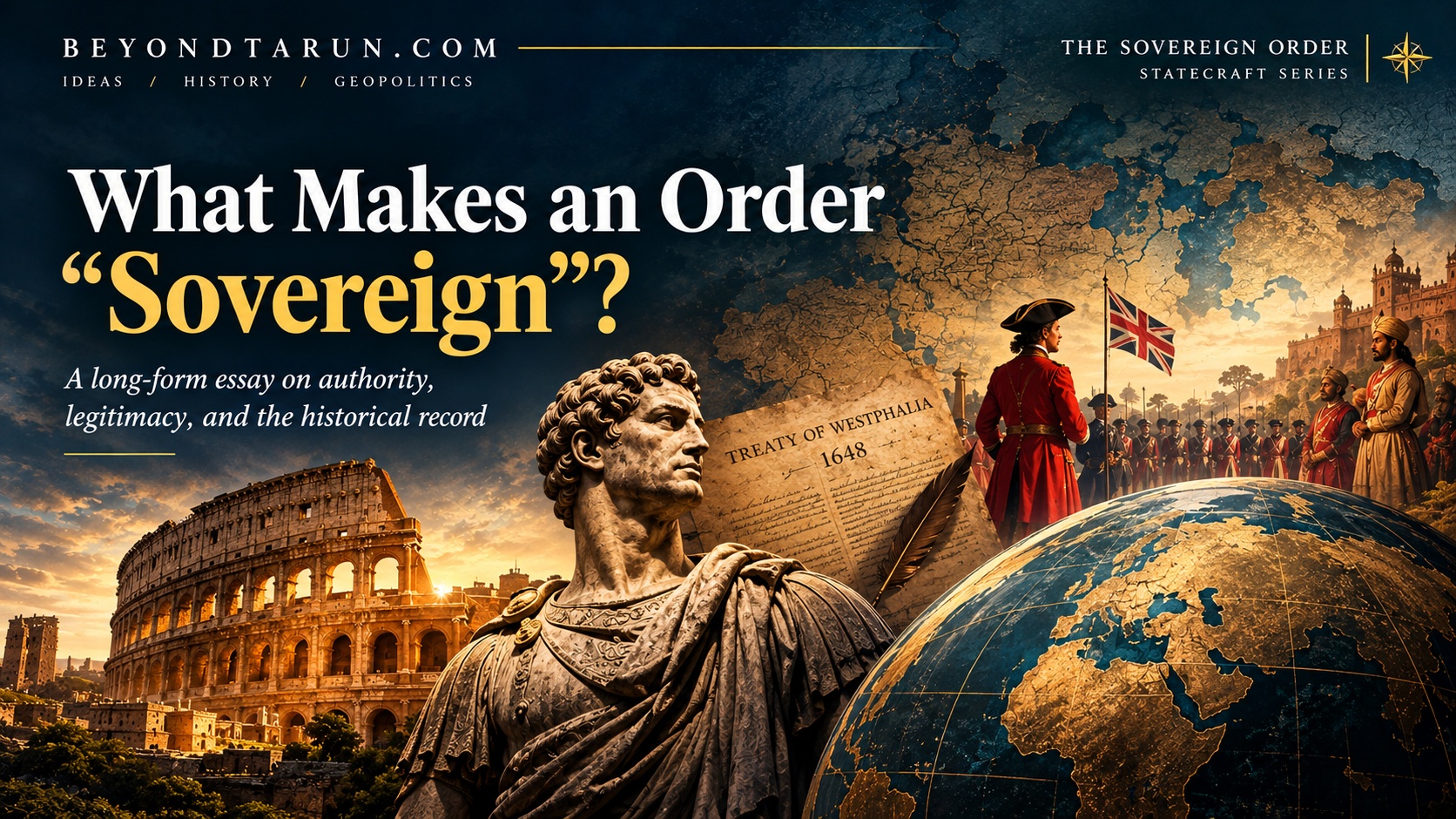
Order and sovereignty are not the same thing. Rome’s citizenship grants, the doctrine of paramountcy over princely India, and the League of Nations mandate system each show what happens when a system has real administrative order but not real sovereignty, and what separates the two turns out to matter as much today as it did…
-
The Architecture of Agreement: The Art, Concepts, and Patterns of Negotiation
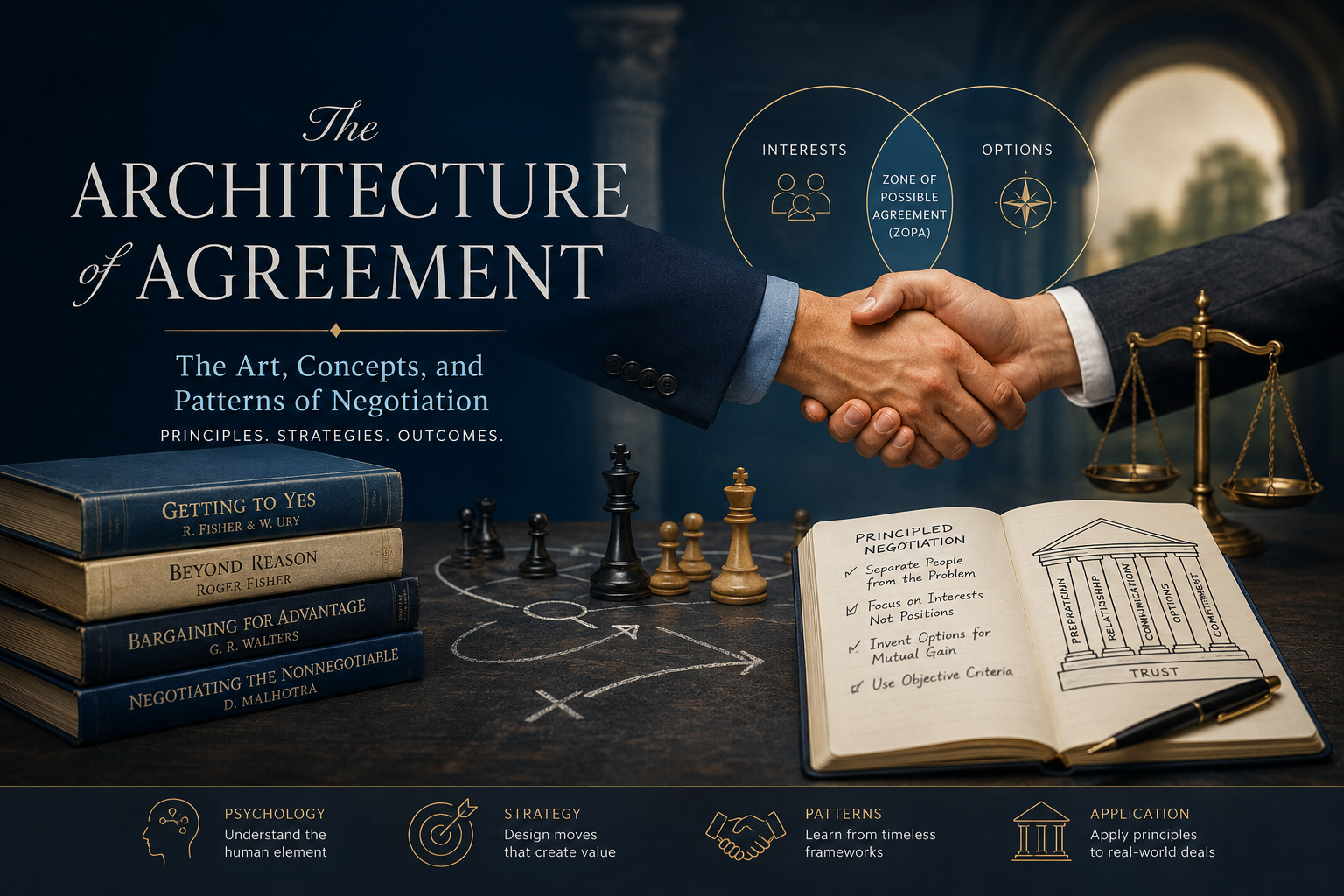
Negotiation is far more than bargaining over price -it is the disciplined process of understanding interests, evaluating alternatives, and creating agreements that leave both sides better off. Drawing on decades of research from Harvard’s Program on Negotiation, Stanford Graduate School of Business, and leading scholars such as Roger Fisher, William Ury, Margaret Neale, and Deepak…
-
Why Negotiation From Weakness Sometimes Wins | The Underdog Playbook of Statecraft
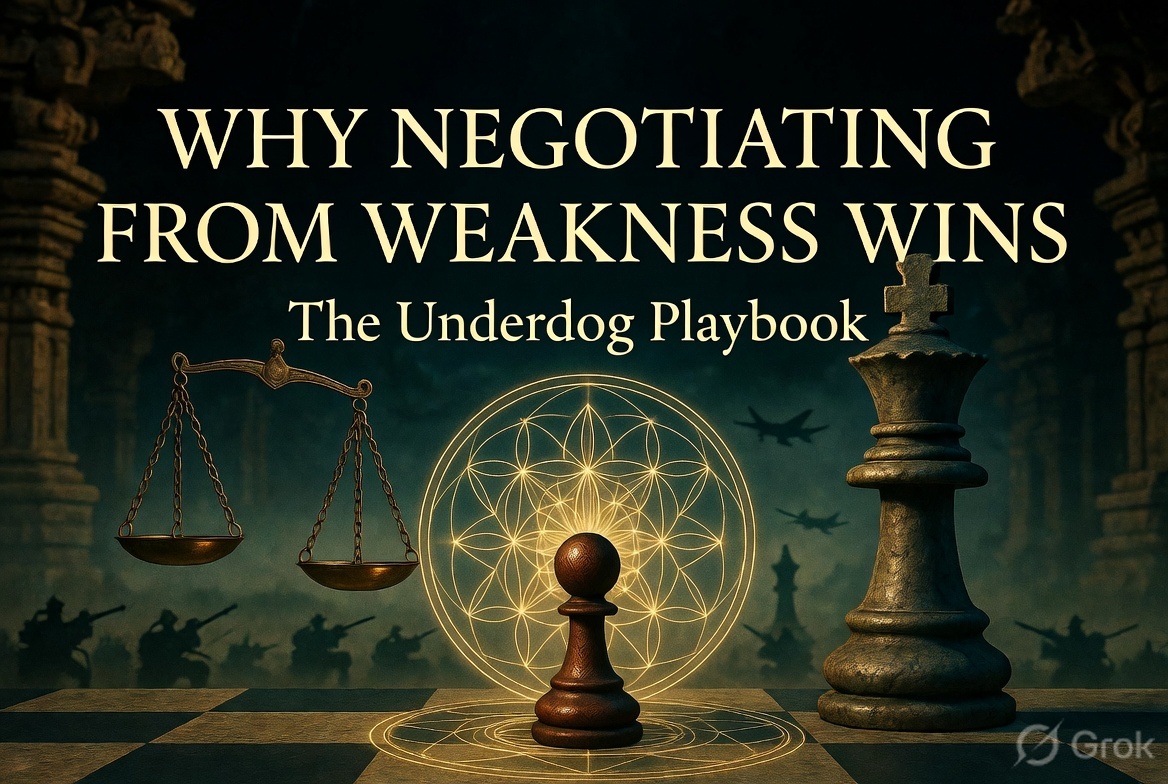
The article discusses strategies utilized by weaker powers to effectively negotiate and prevail against stronger adversaries throughout history. It outlines techniques such as imposing costs on stronger sides, forming strategic alliances, and leveraging broader legitimacy to enhance their positions. The core principle emphasizes that stakes often outweigh raw strength in determining outcomes.
-
Kautilya’s Mandala Theory Explained

Kautilya’s Mandala Theory, rooted in ancient Indian political thought, presents a framework for understanding relationships among states based on geography. Defined in the Arthashastra around the fourth century BCE, it suggests that neighboring rulers are natural enemies (Ari), while distant rulers can be natural allies (Mitra). This theory facilitates predictions about alliances and hostilities, emphasizing…
-
Chanakya’s Spycraft

Kautilya, known as Chanakya, established the first formal intelligence service in ancient India through his treatise, the Arthashastra. It outlined a comprehensive espionage system consisting of nine types of spies, loyalty tests, and covert operations. His methods emphasized systematic information gathering and verification, influencing modern intelligence strategies.
-
The Art of the Controlled Enemy

The goal was never to win completely; it was to ensure the game never ends. True statecraft doesn’t destroy a rival—it manages it for permanent advantage. Discover the six hidden techniques behind why smart power, dominant corporations, and global institutions quietly preserve their enemies to maintain internal control and funding.